How To Plan A Baseball Practice
Practice design is not as intimidating as one would think. However, for the novice coach, it may be a daunting task. Baseball Zone’s Practice Planner makes it quick and easy. We have a bunch of great drills and formats already in there for you to choose from. Just point, click and print.
Here is a quick template that touches on the most important aspects of a practice for the younger kids:
Baseball Lessons From the Super Bowl
Close games are nearly always won or lost on a few key plays that change the game or the momentum. Last night’s game was no exception.
Two key plays triggered the outcome. The catch by Manningham and the drop by Welker. While the catch was a great play by both quarterback and receiver, the drop by Welker allowed the Giants to get the ball back in order to make that play. It would have been a great catch as well by Welker, one he has made a thousand times, just couldn’t come up with it.
Drills, Drills and More Drills
Drills are a great way to get the player to feel what you are trying to get them to feel. If done properly, they can benefit the players immensely. If done improperly, they are reinforcing bad habits.
“Practice doesn’t make perfect, practice makes permanent.”
How To Choose A Baseball Glove
Choosing a glove may be the most critical decision you make as a player. You can always use someone else’s bat if need be, only one person can hit at a time. But, you can’t use someone else’s glove, they’re using it. Also, by using someone else’s glove, your hand/finger size may alter the inside finger holes, making the glove feel uncomfortable or not fit right for the other person.
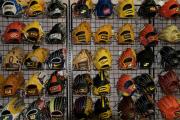
The older a player gets, the more persnickety he gets about his glove. That glove is now an extension of him as a fielder. There is not a better feeling than putting on a glove that fits your hand perfectly.
Occupy Baseball, 99% vs. 1%
This time of year, many travel baseball teams here in the Midwest have secured inside training facilities on a weekly basis. Travel baseball is big business now. Players pay a pretty penny for coaches, training, leagues and tournaments. Training sessions for teams inside can last anywhere from an 1-2 hours. If your team is lucky enough (or has spent enough money), you will rent a field and some cages.
Fielding Footwork
While it’s safe to assume that the vast majority of major leaguers possess great arm strength, a closer look may reveal something you might not expect. Players seldom during a game “air it out.” Not every pitch or play requires a player to use 100% of his arm speed/strength. But when they have to, how do they do it?
Hand Path
The hand path is one of the most critical parts of the baseball swing, and the hardest to perfect. Being able to get your hands “On plane” with the pitch as quickly as possible is so difficult because during the swing it’s not just the hands that play a role, it’s also dependent on body rotation.
Hitting Approach
I’m sitting here watching the Braves play the Giants in game 2 of their best of five series and something huge comes to mind... how to think as a hitter. It is the bottom of the first inning with two men on, Pat Burrell comes to bat. Braves starter Tommy Hanson has just walked Buster Posey on 4 pitches. Quick, if you are Pat Burrell, what are you thinking as you are walking to the plate?
What to Look For When Evaluating and Correcting Fundamentals
First and foremost, coaches must have a working knowledge of what good fundamentals look like in their mind, whether it’s on the mound, in the field or up at the plate. Time and again when teaching, the same buzz words come up: balance and athletic position. If the player does not start in a balanced, athletic position, his/her chance for having success drops dramatically.
Teaching points: Hitting
While not all swings are exactly alike, the most successful hitters all exhibit relatively the same traits at each point in their swing. As a hitting instructor or just a dad teaching his son or daughter to hit, here are a few key points to look for when instructing.
Baseball T-Shirts

Check out our new t-shirts here:
Baseball Zone T-Shirts
Newsletter Signup
Hi! I'm Coach Dan.

Let me show you how to run better practices with my proven practice plans. Read More...
Purchase a Membership
Special Preseason Prices!
Working with young players is a constant challenge. Baseball Zone helps you plan practices quickly, giving you a solid practice plan in no time. These are some of the same drills we used at the major league level.
Mike MacFarlane
Former Catcher
Kansas City Royals
Owner, Mac-N-Seitz Baseball Academy
Baseball Zone is a fundamental but advanced approach to the game of baseball and its endless preparation. This program is as good as there is, the passion shows.
Jim Benedict
Special Assistant to
the General Manager
Pittsburgh Pirates
Baseball Zone's drills and techniques are what every player needs to master to get to the next level.
Lee Driggers
Head Baseball Coach
Wheaton College