How To Choose A Baseball Glove
Choosing a glove may be the most critical decision you make as a player. You can always use someone else’s bat if need be, only one person can hit at a time. But, you can’t use someone else’s glove, they’re using it. Also, by using someone else’s glove, your hand/finger size may alter the inside finger holes, making the glove feel uncomfortable or not fit right for the other person.
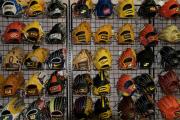
The older a player gets, the more persnickety he gets about his glove. That glove is now an extension of him as a fielder. There is not a better feeling than putting on a glove that fits your hand perfectly.
Occupy Baseball, 99% vs. 1%
This time of year, many travel baseball teams here in the Midwest have secured inside training facilities on a weekly basis. Travel baseball is big business now. Players pay a pretty penny for coaches, training, leagues and tournaments. Training sessions for teams inside can last anywhere from an 1-2 hours. If your team is lucky enough (or has spent enough money), you will rent a field and some cages.
Hand Path
The hand path is one of the most critical parts of the baseball swing, and the hardest to perfect. Being able to get your hands “On plane” with the pitch as quickly as possible is so difficult because during the swing it’s not just the hands that play a role, it’s also dependent on body rotation.
Hitting Approach
I’m sitting here watching the Braves play the Giants in game 2 of their best of five series and something huge comes to mind... how to think as a hitter. It is the bottom of the first inning with two men on, Pat Burrell comes to bat. Braves starter Tommy Hanson has just walked Buster Posey on 4 pitches. Quick, if you are Pat Burrell, what are you thinking as you are walking to the plate?
Buying Baseball Equipment
For ages 6 and 7
Individual Practice Plans
Having a well thought out individual practice plan is important. Players need reps and having a plan to get those reps efficiently can make for very productive workout.
Download these individual practice plans and practice planners if you are serious about getting your reps.
Transitioning From Batting Cage to the Game
Here is a question I got recently from the parent of one of my students: How can I get my son to translate the success he has in the batting practice cage into the game?
To answer this question, I will make some assumptions. One, in batting practice, the coach is closer than normal. Two, he is not throwing as hard. Three, it's practice. No pressure. And four, the fear factor.
Playing Catch & Proper Throwing
How to Play Catch
One of the most overlooked aspects of practice is playing catch. If during the game your team is struggling with making accurate throws, the time to work on it is during practice catch time. Regardless of what throwing program you use, it is imperative that the kids understand what the proper grip is, that they need to throw to a target and that they need to utilize proper throwing mechanics. If your players cannot hit their partner from seventy feet away in the chest consistently during practice, no way they will be able to make a 100-150 foot throw with the game on the line.
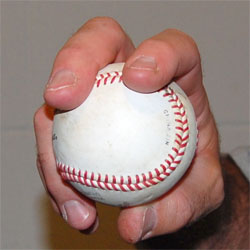 Take playing catch very seriously. First, show kids the proper 4-seam grip. You’ll be surprised as to how many do not know. A proper grip will allow the ball to be thrown straighter, harder and farther. Stress that the ball is not to be thrown unless they get the proper grip. Watch them throw all the time and make sure to check their grip frequently. The faster they can get at finding the grip without looking, the better. Seasoned baseball players are able to find this grip in their sleep and are able to spin the ball in their hands as they are throwing to get it. It takes practice.
Second, make sure they are throwing at a target. Start out with the kids trying to hit their partner in the chest, every time. As they progress, have them pick spots: right shoulder, left shoulder, head, etc. The better they can get at hitting spots in practice, the more accurate they will be in the game.
Lastly, make sure they are throwing with the proper form. Hitting your target is all about the release point of the ball. Without proper form, the release point will vary, leading to inconsistent throws. Proper form will also help in utilizing the entire body, put less stress on the arm and will get more on your throw.