Common Mistakes in Young Hitters
If major league hitters are one thing, they are meticulous. Watch them get their stance in the box. This process can seem to take hours. They tighten their batting gloves, they dig their back foot in, step back out of the box, they put their hand up to the umpire for time, take their stance again, and then they tap the plate and check their alignment. Okay, I’m ready. This tells me one thing, your set up matters. A lot.
Take the time to get it right and put your body in a strong starting position. Many times I watch hitters jump in the box and go, often times starting in different positions. They may be slight, but different nonetheless. It’s the difference between hitting a line drive and fouling a ball off. If your body is in a different starting position every time, it stands to reason that you will not swing the bat the same way every time, producing inconsistency. Consistency is a hitter’s best friend.
The second major flaw with young hitters is dropping their hands during their stride/load phase of their swing. At a younger age, it’s not so important that they load their hands, but more importantly that they keep their hands up in a strong hitting position. One of THE most important hitting positions that is constant with nearly all major league hitters, is the position of their hands when their stride foot lands. Regardless of where their hands start, nearly all major league hitters will get their hands just off their back shoulder and at shoulder height when the stride foot lands. We commonly refer to that spot as the launching position or the spot where we start our swing with our hands. When teaching young hitters, ensure that they are finding this spot consistently.
The last common flaw I see among young hitters is their lack of follow through. Make sure that the back hip gets all the way through (back foot is in-line with the pitcher) and that their hands get the bat all the way to the front shoulder. This will ensure a proper hip turn and a proper upper body turn and consequently, a proper follow through.
Baseball Zone’s Memberships give parents and coaches access to videos, drills and articles on the fundamentals of hitting, pitching and defense as well as a lot of material on practicing, training and equipment.
Baseball Zone’s Practice Planner makes creating practice plans quick and easy. With over a 150 different drills to choose from, creating a well thought out plan is only a few clicks away.
Learn More
How to Choose a Baseball Glove
How to Break In a Baseball Glove
Playing Catch and Proper Throwing
Transitioning From Batting Cage to the Game
Here is a question I got recently from the parent of one of my students: How can I get my son to translate the success he has in the batting practice cage into the game?
To answer this question, I will make some assumptions. One, in batting practice, the coach is closer than normal. Two, he is not throwing as hard. Three, it's practice. No pressure. And four, the fear factor.
Playing Catch & Proper Throwing
How to Play Catch
One of the most overlooked aspects of practice is playing catch. If during the game your team is struggling with making accurate throws, the time to work on it is during practice catch time. Regardless of what throwing program you use, it is imperative that the kids understand what the proper grip is, that they need to throw to a target and that they need to utilize proper throwing mechanics. If your players cannot hit their partner from seventy feet away in the chest consistently during practice, no way they will be able to make a 100-150 foot throw with the game on the line.
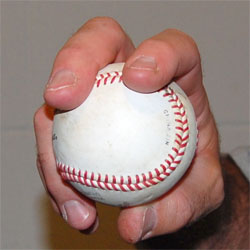 Take playing catch very seriously. First, show kids the proper 4-seam grip. You’ll be surprised as to how many do not know. A proper grip will allow the ball to be thrown straighter, harder and farther. Stress that the ball is not to be thrown unless they get the proper grip. Watch them throw all the time and make sure to check their grip frequently. The faster they can get at finding the grip without looking, the better. Seasoned baseball players are able to find this grip in their sleep and are able to spin the ball in their hands as they are throwing to get it. It takes practice.
Second, make sure they are throwing at a target. Start out with the kids trying to hit their partner in the chest, every time. As they progress, have them pick spots: right shoulder, left shoulder, head, etc. The better they can get at hitting spots in practice, the more accurate they will be in the game.
Lastly, make sure they are throwing with the proper form. Hitting your target is all about the release point of the ball. Without proper form, the release point will vary, leading to inconsistent throws. Proper form will also help in utilizing the entire body, put less stress on the arm and will get more on your throw.